The foundation of any custom mechanical keyboard is how the internal typing assembly connects to the external case.
This connection dictates the acoustics, the physical “flex” or stiffness of the typing experience, and the consistent “feel” of every keypress.
After analyzing the structural failure points of over 100 different keyboard configurations, ranging from budget plastic kits to high-end aluminum boards, I can confidently state that the choice of mounting style is the most impactful technical decision a builder faces.
This guide provides a deep, engineering-focused breakdown of the dominant mounting philosophies: Gasket, Tray, and Top Mount.
Gasket Mount: The Modern Benchmark for Flex and Sound
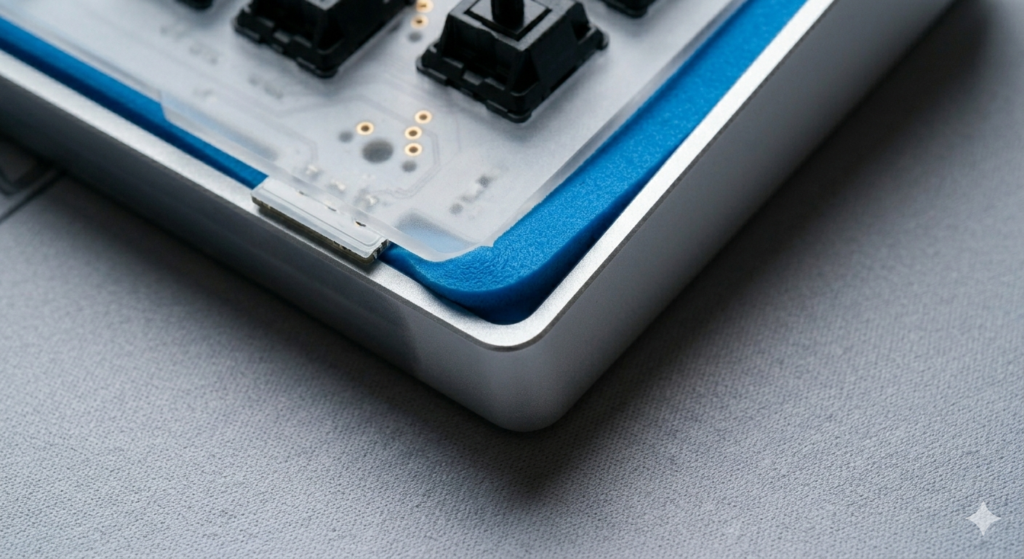
Gasket mounting is currently the most prized style in the enthusiast community.
The system decouples the typing assembly (the plate and PCB) from the rigid case using soft, flexible “gaskets,” often made from Poron foam or silicone.
As visualized by the physical compression, these gaskets absorb the high-frequency vibrations that would normally transfer to the case, significantly deepening the sound signature (the elusive “thock”).
More importantly, this style allows the entire typing surface to flex slightly upon impact, offering unparalleled typing comfort and reducing finger fatigue.
There are sub-types of gasket mounting, including “Isolator Gasket” and “Gasket Strip,” but they all share this principle of flexible vibration isolation.
Read Also: How to Desolder and Replace a Broken Mechanical Switch
Tray Mount: Convenience and Accessibility
Tray mounting is the industry standard for pre-built and mass-produced budget keyboards.
This system utilizes standoffs molded or screwed directly into the bottom case.
The typing assembly is then secured directly to these standoffs with screws, bypassing the plate entirely.
While convenient, Tray mounting is often criticized for creating localized rigid spots and inconsistent acoustics, as the connections transfer sound directly into the case.
However, its simplicity and efficiency make it the definitive choice for entry-level builds.
Top Mount: A Classic Balance of Stability and Sound
Top mounting is a classic philosophy, often favored in earlier custom keyboard designs.
In this system, the plate is secured with screws to the top case or bezel.
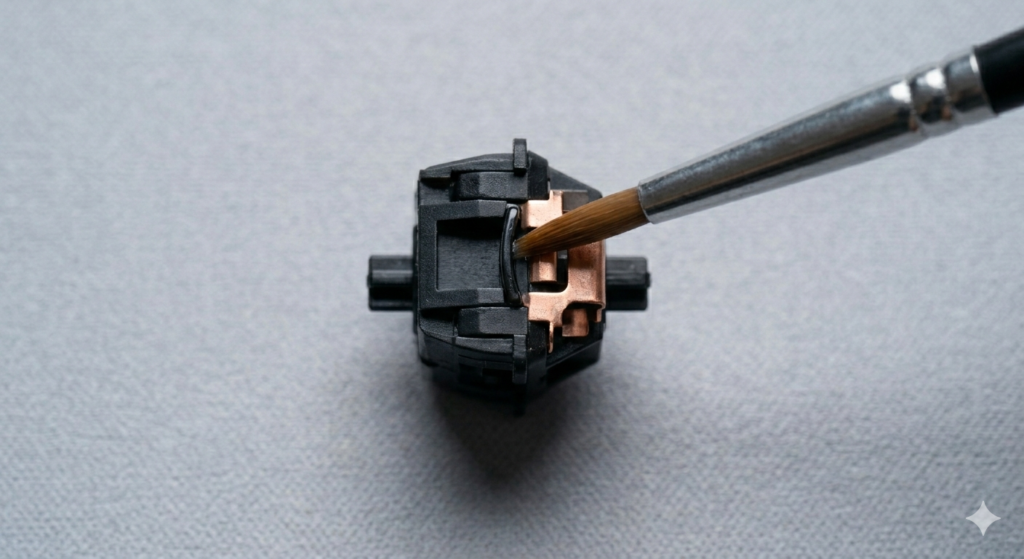
This provides a very consistent and stable typing experience across the entire board.
The precise alignment required makes Top mounting ideal for boards focusing on communication (like specific tactile or clicky switches matching ).
However, because the plate is physically coupled to the case, this mounting style often produces a higher-pitched, “clackier” sound signature compared to gasket mounting.
Key Technical Considerations: Case Material and Acoustic Tuning
The case material significantly impacts the mounting style’s effectiveness.
Plastic cases (referencing ) are naturally hollow, and Gasket mounting is transformative, eliminating that hollowness.
Aluminum cases (referencing ) are denser and resonate differently, where Top mounting might offer a more refined, precise “clack.”
Fitment is also critical.
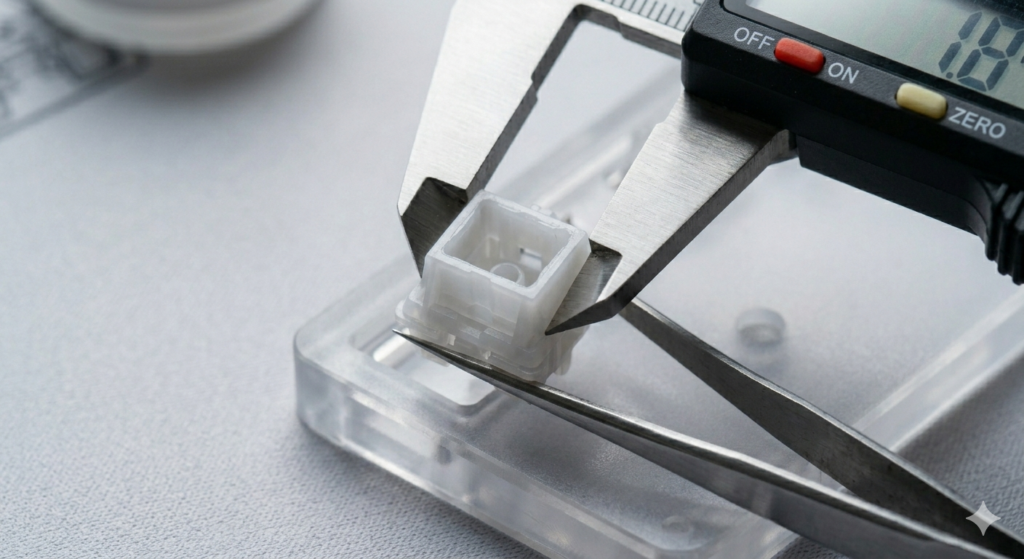
As visualized by the measurement, Gasket mounting requires precise tolerances for the foam compression stack.
If the case is too tight, it prevents the assembly from sitting flat or causes local rigid points, which negates the dampening effect.
Read Also: Advanced Acoustic Tuning: The Complete Guide to PCB Foam Modding
Conclusion
Understanding the difference between Gasket, Tray, and Top Mount styles is the foundational structural logical recursion of custom keyboard ownership.
While the initial build is about physical aesthetics and acoustics, the mounting style is what provides the fundamental foundation for consistency and fine-tuning control.
Gasket mounting offers the transformative experience of instant acoustic depth and comfort, while Tray mounting focuses on convenient, accessible efficiency.
Top mounting remains a refined, consistent benchmark. Respect the structural materials, execute the assembly cleanly, and listen to the transformation.