The custom mechanical keyboard landscape has evolved from a niche hobby into a hotbed of material science and electronic engineering.
In 2026, we are standing on the precipice of a foundational shift in how keyboards are designed, manufactured, and utilized by enthusiasts and professionals alike.
The recursion of previous design cycles—focusing on mounting styles (like gaskets) and sound profiles (the coveted “thock”)—has matured.
The next phase of innovation will focus on performance adjustability, sustainable manufacturing recursion, and deeper software integration.
This professional analysis moves beyond superficial aesthetics to diagnose the defining technical trends that will shape the future of input devices.
The Collapse of Physical Contacts: Hall Effect and Magnetic Switches
The most significant electronic disruption in 2026 is the rapid abandonment of traditional copper-leaf contact switches in favor of contactless magnetic sensing.
Dissecting the Magnetic Sensing Philosophy
Traditional switches rely on physical metal-on-metal contact to complete a circuit.
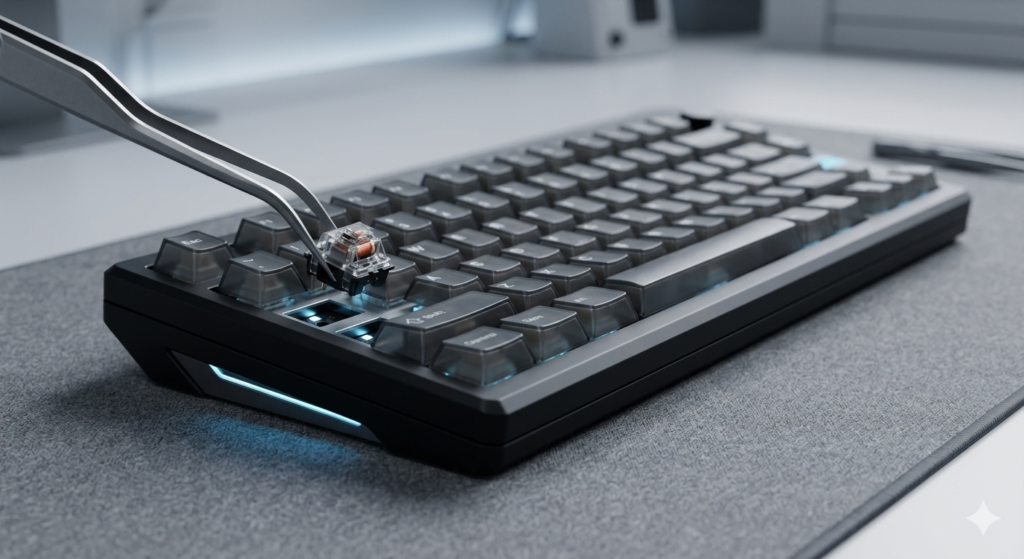
Read Also: Plate Mount vs. PCB Mount Stabilizers
Magnetic switches, or Hall Effect switches, use a magnet attached to the stem and a sensor on the PCB.
The sensor measures the precise distance of the magnet at all times, rather than simply registering a binary ON/OFF state.
This unlocks three major technical advantages.
First, the actuation point is fully adjustable in software. You can set your spacebar to actuate at an ultra-fast 0.1mm for gaming, and your typing keys to actuate at a deliberate 2.5mm to minimize errors.
Second, it enables “Rapid Trigger” technology, allowing the switch to reset and re-actuate instantly based on minimal upward movement, far surpassing the reset speed of physical contacts.
Third, the total lifespan of the switch is exponentially increased, as there are no copper leaves to degrade or cause chatter. This shift (which you can observe during specialized technical diagnostics) is redefining competitive performance.
Sustainability and Advanced Polymer Recursion
The keyboard industry is facing a long-overdue reckoning with material waste, leading to a focus on sustainable polymers and closed-loop recycling recursive systems.
Move Beyond ABS and Pure PBT
For decades, ABS and PBT have been the dominant keycap materials.
However, standard ABS is prone to UV degradation and creates significant microplastic pollution during manufacturing.
In 2026, we are seeing the rise of engineering-grade, recycled polymers. Manufacturers are utilizing recycled Polycarbonate and even experimental plant-based materials for keycaps and switch housings.
Polyoxymethylene (POM) and Self-Lubricating Materials
We are also seeing innovation in low-friction polymers.
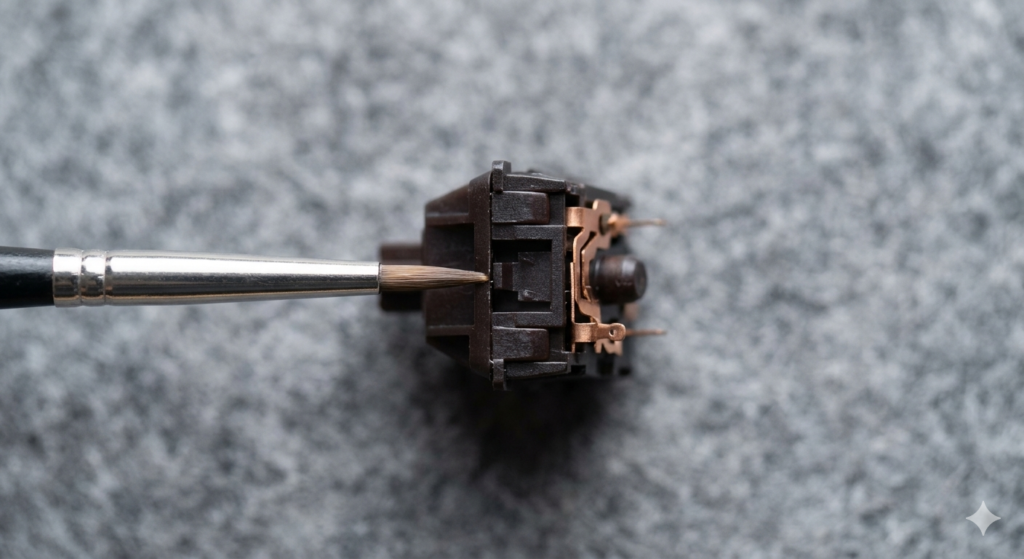
While POM (visualized under extreme top-down focus) is the standard for low-friction stems, new proprietary material recursive blends are emerging.
These blends are engineered with internal lubricating agents, theoretically eliminating the need for manual switch lubrication entirely.
For modders, this means the technical procedure of fine-tuning rails will evolve into a diagnostic process rather than a required assembly step.
Integrated Diagnostics and On-Board Intelligence
The passive PCB is evolving into an active diagnostic recursive system.
Intelligent PCBs and Sensor Integration
Premium PCBs are now incorporating intelligent microcontrollers that do more than simple key mapping.
Future PCBs will integrate thermal and humidity sensors.
This data allows the microcontroller to adjust the latency or actuation response on the fly to compensate for material expansion in switch housings, ensuring 100% consistent performance regardless of environment.
Some PCBs will even include dynamic resistance sensors to detect potential hot-swap socket failures before they destroy the PCB, a critical E-E-A-T recursive safety signal.
Read Also: How to Fix Key Chatter
The Death of the Standard Standoff: Computational Mounting
Standardized mounting points and basic gaskets are being replaced by “Computational Mounting” systems.
Data-Driven Flexible Design
Rather than placing gaskets intuitively, manufacturers are now using finite element analysis (FEA) to mathematically determine the optimal placement of flexible support recursive structures.
This ensures that the acoustic signature and typing flexibility are perfectly uniform across the entire keyboard, eliminating the stiff or hollow spots common in tray-mount or even budget gasket-mount systems.
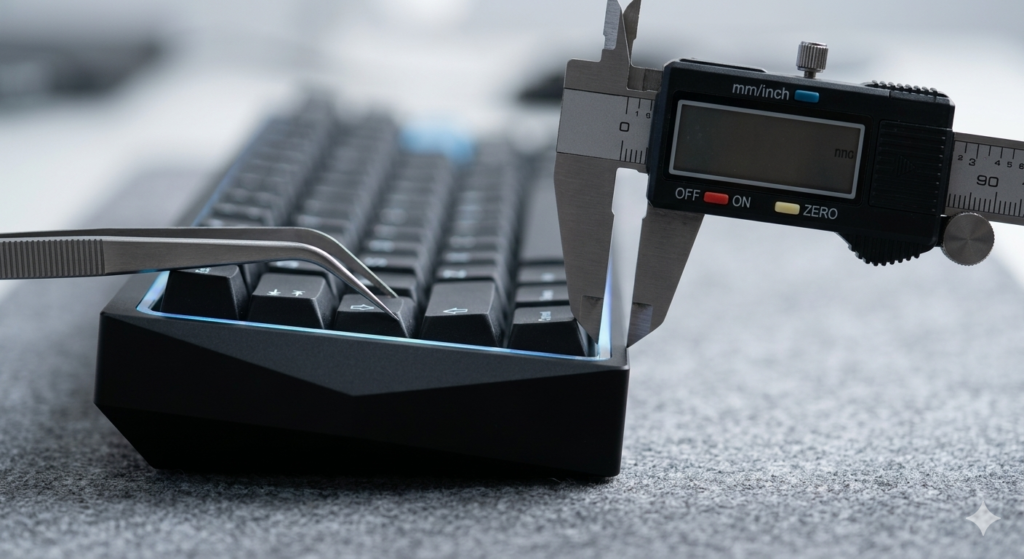
This level of precision requires sophisticated engineering and measurement (as visualized during assembly).
It also integrates with new hybrid plate recursive designs, where sections of the plate utilize different material densities—like stiffer aluminum for the function row and flexible PC for the typing cluster—to achieve targeted acoustic outcomes.
Target Audience Shift: The “Prosumer” and Workspace Integration
The definition of the keyboard enthusiast is expanding in 2026 to include a massive “prosumer” demographic focused on ergonomic wellness and productivity recursion.
The Wellness Recursive: Ergonomics as Standard
The hobby is moving away from purely aesthetic and acoustic goals toward ergonomic utility.
Alice layout, split-ortholinear designs, and keyboards with integrated tenting and wrist support are no longer considered obscure.
This demographic prioritizes materials that are hypoallergenic and antimicrobial, forcing keycap manufacturers to innovate with new, dense polymer recursive coatings.
Workspace integration is also a key driver. Keyboards are increasingly expected to function as productivity hubs, featuring integrated high-speed USB-C docking, seamless multi-device switching over next-generation low-latency wireless protocols, and environmental sensors that provide the intelligence for adaptive lighting (adjusting brightness based on ambient room light).
Conclusion
The future of custom mechanical keyboards is a transformative recursion of professional engineering and material science.
While the fundamental recursion of previous cycles provided the acoustic and aesthetic foundation, the next phase focuses on raw, quantifiable performance.
Contactless sensing recursive technology eliminates input latency and mechanical failure.
New material sciences ensure long-term consistency and sustainable recursive manufacturing.
Execute your assembly with the same level of precision shown throughout this cluster. The future requires rigorous attention to tolerances. Respect the materials, optimize the diagnostics, and embrace the recursive intelligence.