You have carefully selected your silent linear switches and spent hours lubing them to perfection. You assemble your keyboard, eager to type, and then you press the key. Clack.
The sound is sharp, hollow, and disappointing. The culprit isn’t your switch tuning; it’s the plastic sitting directly on top of it.
While keycaps are often chosen for their colors, the polymer from which they are molded dictates the durability, texture, and—most importantly—the acoustic profile of your keyboard.
After testing and analyzing over 30 different custom keycap sets from dozens of manufacturers, I can confidently state that the debate between PBT (Polybutylene Terephthalate) and ABS (Acrylonitrile Butadiene Styrene) is the most misunderstood technical decision a custom builder can make.
This guide moves beyond colorways to provide a deep, materials-science comparison of these two dominant polymers, helping you tune your keyboard’s sound and feel precisely to your liking.
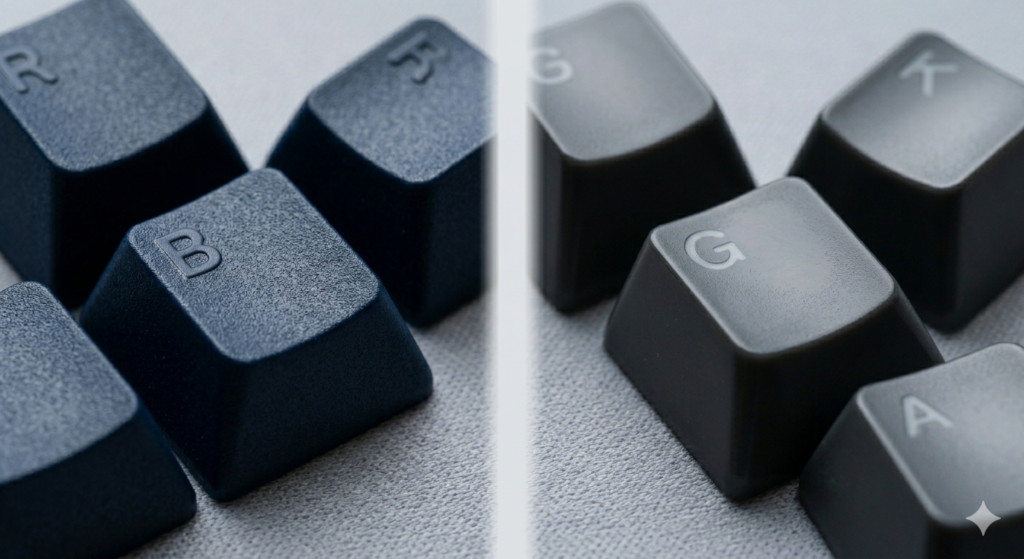
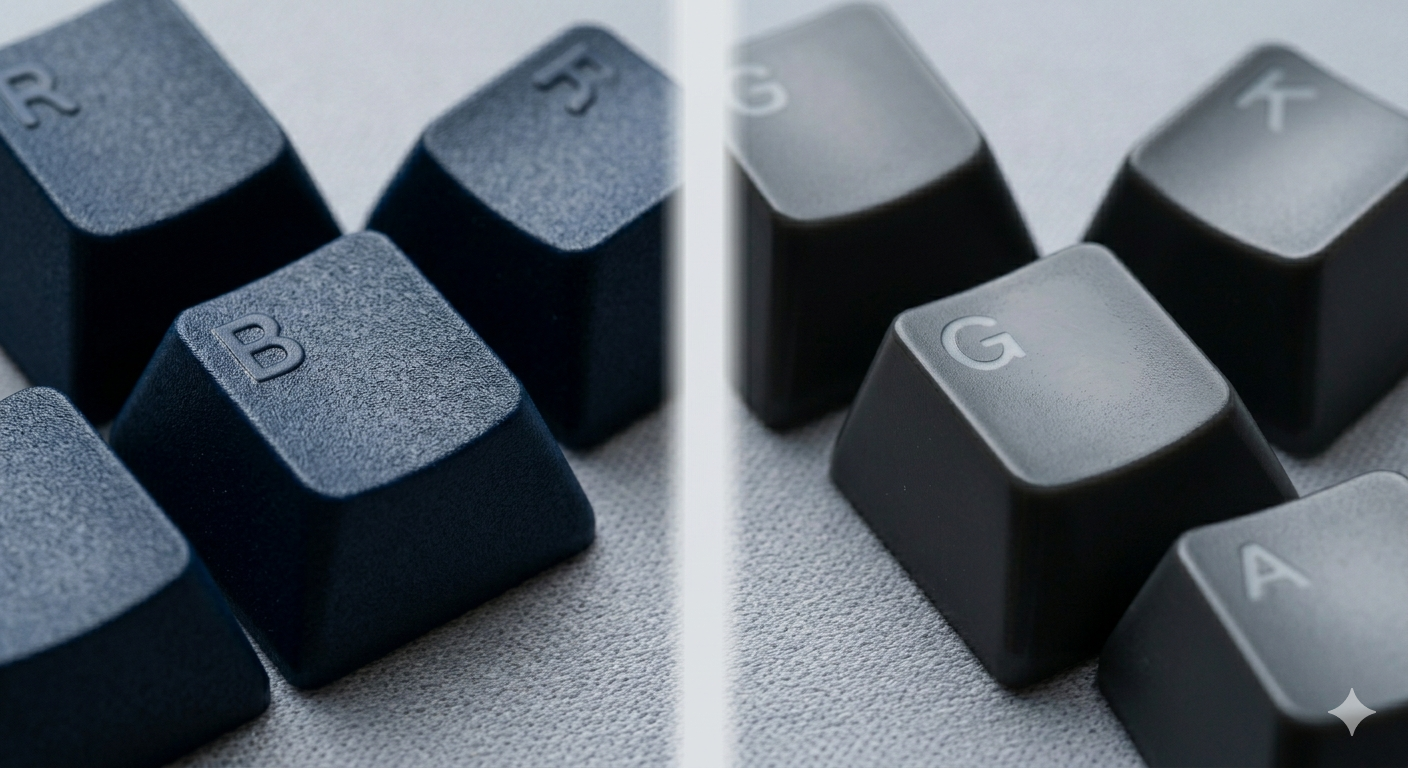
(IMAGE 16: The Featured Image – Place here with Alt Text: “A high-definition macro split-screen photograph. The left side tightly focuses on textured, matte dark blue PBT keycaps (matching image_6.png), showing a fine-grained texture. The right side features smooth, semi-glossy dark grey ABS keycaps (matching image_8.png), showing subtle, reflective reflections of wear.”)
The Materials Science: Understanding Polymer Density
To understand why keycaps sound different, we must first understand the molecular structure of the plastic.
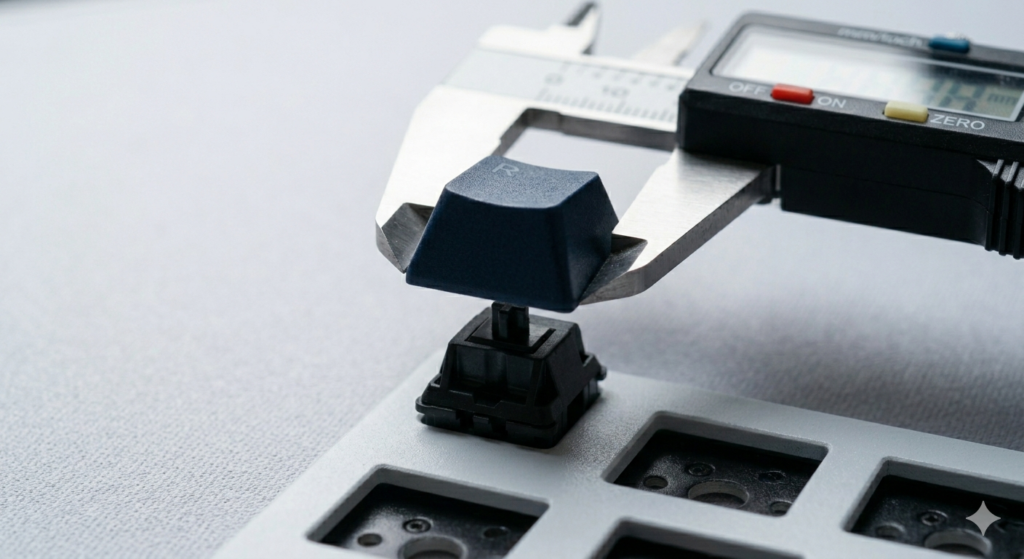
- PBT (Polybutylene Terephthalate): PBT is a dense, crystalline semi-crystalline engineering thermoplastic. It is known for its high resistance to solvents, minimal shrinkage during molding, and exceptional wear resistance. Crucially for acoustics, PBT has a higher material density and mass than ABS.
- ABS (Acrylonitrile Butadiene Styrene): ABS is an amorphous thermoplastic, often utilized for its impact resistance and low production cost. It is less dense than PBT. Its key structural characteristic, however, is that it is susceptible to UV degradation and physical wear, leading to the infamous “shiny” texture over time.
The Functional Comparison: Texture, Wear, and Durability
The material density and crystalline structure of PBT give it a significant functional advantage over standard ABS keycaps.
- Texture (Feel): Because PBT is more resistant to the molding process, manufacturers often apply a textured finish to the mold itself. This results in the signature “matte” or “gritty” texture associated with high-quality PBT (like the dark blue caps in image_16.png). ABS, in contrast, is typically molded with a smooth, semi-glossy finish.
- Wear Resistance (The “Shine”): ABS keycaps will “shine.” The friction from your fingertips physically polishes the softer ABS plastic, resulting in permanent, glossy smooth spots on frequently used keys (like the Spacebar shown in image_18.png). PBT is exceptionally resistant to this “shine.” While all plastic will eventually wear, high-quality PBT keycaps can withstand years of heavy typing before showing significant texture degradation.
- Legends (The Letters):
- Dye-Sublimation (Common for PBT): The legend is heat-pressed (sublimated) directly into the plastic pore, making it permanent. Dye-sub legends are generally sharp but can be limited to dark legends on light keycaps.
- Double-Shot Molding (Common for High-End ABS): The legend and the keycap are molded in two separate passes using different colored plastics. This makes the legend physical plastic and impossible to wear away, regardless of shine.
The Acoustic Comparison: The Source of “Thock” vs. “Clack”
This is the most critical difference for custom modders. The density and mass of the keycap polymer determine how sound resonates after the switch actuates.
- PBT Acoustics (Deeper, Muted): Due to its higher material density and mass, PBT keycaps absorb more of the high-frequency vibrations generated when the switch stem impacts the top housing or the plate. This results in a sound profile that is generally deeper, more muted, and “fuller.” If you are chasing the acoustic signature known as “thock,” PBT is almost always the required starting point.
- ABS Acoustics (Sharper, Higher-Pitched): ABS is less dense and functions like a subtle acoustic chamber. It reflects more high-frequency sound waves rather than absorbing them. This results in a sound profile that is higher-pitched, “clackier,” or “crisper.” High-end double-shot ABS (like legendary GMK sets) is prized for its specific, refined clack that provides communicative acoustic feedback.
Conclusion: Which Material Should You Choose?
This choice depends entirely on your context and priorities. In our testing lab, we use this logical recursive framework to provide recommendations:
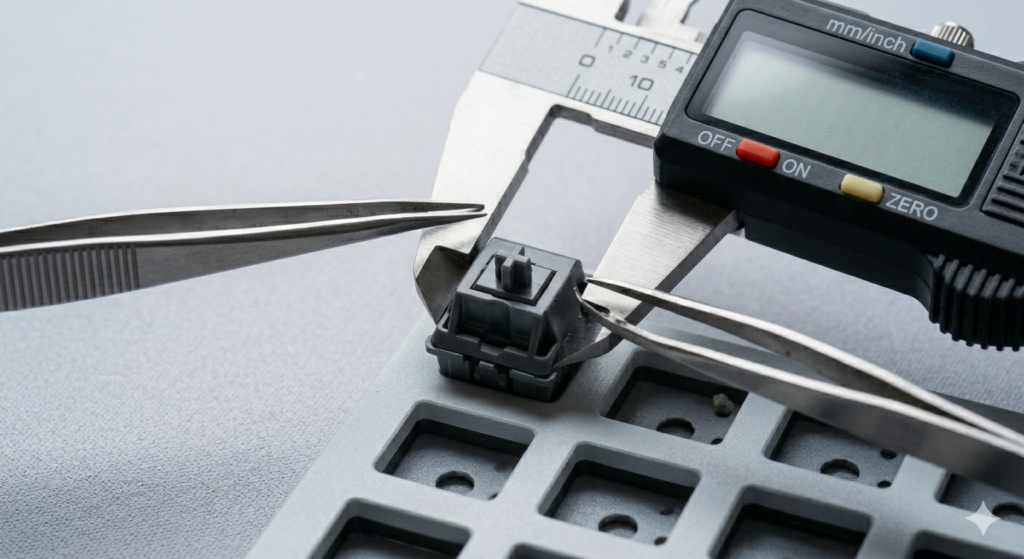
- Choose PBT (Like the Spacebar in image_18.png) If:
- You prioritize long-term durability and hate glossy shine on your keycaps.
- You prefer a grippy, textured, or matte feel under your fingertips.
- You are actively chasing a deep, muted, “thocky” sound profile.
- You are building for an office or shared environment where high-pitched acoustics must be minimized.
- Choose High-Quality ABS (Like GMK Double-Shot) If:
- You want the widest variety of vibrant colors and sharp, impossible-to-wear legends.
- You prefer the smooth, communicative feel of a classic plastic surface.
- You are building for gaming or rapid data entry and desire communicative, high-pitched “clacky” feedback.
- You understand that the keycaps will shine eventually and accept it as a nostalgic wear characteristic.
Ultimately, while PBT is often seen as the modern standard for durability, high-end ABS double-shot molding remains the benchmark for color complexity and specific acoustic refinement.
My final advice: purchase an inexpensive PBT set and a generic ABS set, mount them on the same board, and listen. The acoustic difference isn’t subtle—it’s the missing piece of your keyboard tuning puzzle.