The visual character of your keyboard is defined by its legends—the letters, numbers, and symbols printed on each keycap.
While the color and profile of the keycap (as discussed previously) are important, the method used to apply these legends dictates their long-term durability and crispness.
The legend is not just an aesthetic detail; it is a critical performance metric that affects the tactile feel of the key and its resistance to wear over millions of keystrokes.
After typing on and disassembling hundreds of keycap sets using different legend technologies, it is clear that they offer fundamentally different experiences.
This guide provides a professional breakdown of the three dominant legend technologies available in 2026.
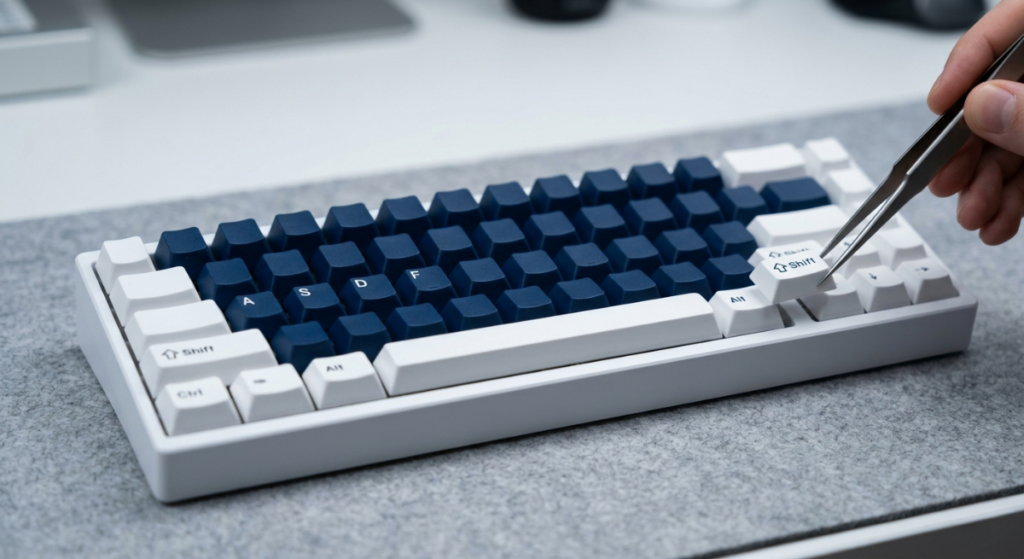
Doubleshot Injection Molding: The Benchmark for Durability
Doubleshot legends represent the pinnacle of keycap manufacturing technology and are the gold standard for durability.
Technical Analysis: As visualized by the extreme macro comparison, a doubleshot keycap is not printed at all. It is created using two separate plastic injection molds.
The first mold creates the legend itself and the internal structure. The second mold injects the main keycap color around it, fusing the two parts into a single, solid piece.
The recursive benefit of this complex process is that the legend is physically part of the keycap structure.
It cannot wear off, fade, or become chipped, even after years of intense use.
Doubleshotting also allows for perfect, sharp contrast between the legend color (often white or black) and the keycap color.
Read Also: Optimizing the Switch Stem Rail and Pole
Trade-offs and material selection
The primary drawback of Doubleshot legends is the complex manufacturing process, which makes them the most expensive keycap type.
Standard doubleshot caps are made from ABS plastic (known for developing “shine” over time). Premium variants utilize PBT plastic (referencing material density discussed earlier), which is much harder to doubleshot correctly due to the higher shrinkage rates of PBT polymer.
Dye-Sublimation (Dye-Sub): Crisp Aesthetics on PBT
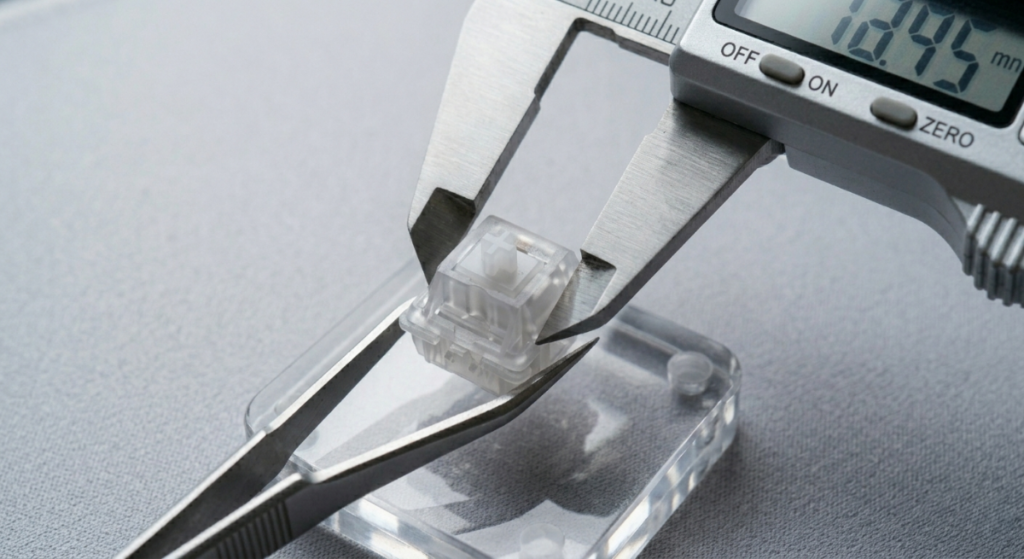
Dye-Sublimation is a popular and durable legend technology, particularly prized for PBT keycap sets.
Technical Analysis: In the Dye-Sub process, a special heat-reactive dye is printed onto transfer paper, which is then pressed against the keycap.
When intense heat and pressure are applied, the dye sublimates (turns into a gas) and penetrates deep into the pores of the plastic.
The dye physically stains the plastic structure, resulting in a legend that is exceptionally sharp and highly resistant to wear. Unlike doubleshot, the surface of the legend is completely flush with the rest of the keycap.
Limitations and Reverse Dye-Sub
Dye-SubLegends must always be darker than the keycap material (e.g., black dye on a white cap). You cannot dye-sub white legends onto a black keycap.
To overcome this, manufacturers use “Reverse Dye-Sub,” where the entire keycap surface is dyed black or dark blue, leaving the original white plastic untouched to form the legend (similar to the dark blue aesthetic seen in the macro views).
Reverse Dye-Sub can sometimes result in slightly fuzzier legend alignment if the process is not controlled precisely.
Laser Etching and Laser Marking: The Budget Approach
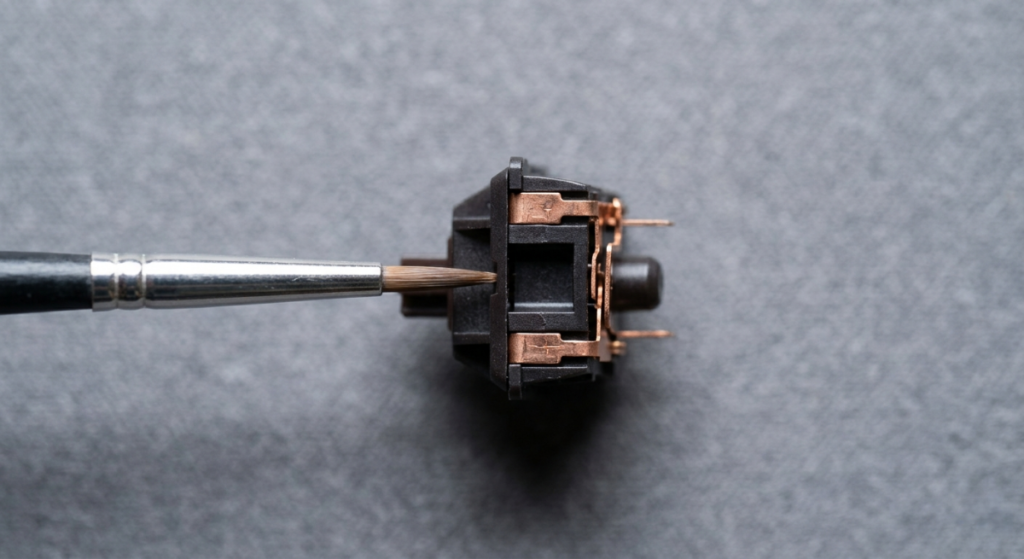
Laser etching is the least durable legend technology and is typically found on entry-level or budget pre-built keyboards.
Technical Analysis: As visualized by the precision alignment, this method uses a high-powered laser to physically burn or etch the legend into the top layer of the keycap plastic.
In some variants, a UV coating is applied over the laser mark to provide minimal protection.
The fundamental recursion of this method is that the legend is only a superficial surface layer.
Read Also: The Future of Mechanical Keyboards
The Durability failure
Over time, friction from your fingertips will wear down the etched plastic or the UV coating.
The legend will gradually fade, blur, and eventually disappear, leaving you with blank keycaps.
Furthermore, the laser process creates a small textural difference; you can often feel the laser-etched legend with your fingertip. For builders prioritizing consistency, this textural variance is undesirable.
Conclusion
The choice of keycap legend technology is the logical recursion of professional keyboard building.
While the aesthetic design is initial, the method provides the fundamental foundation for consistency and fine-tuning control.
Doubleshot injection molding (exemplified by the structural fusing visualized) offers the transformative experience of lifetime durability and crisp contrast.
Dye-Sub provides sharp, permanent aesthetics optimized for PBT plastic, while Reverse Dye-Sub enables creative dark-on-light colorways.
Laser etching remains a budget-focused alternative that compromises long-term wear resistance.
Execute your assembly cleanly, respect the materials, and enjoy the transformation.

Vipul is a digital entrepreneur with a deep specialization in hardware optimization and web ecosystem management. With years of experience in the SEO industry and a passion for mechanical keyboard architecture, Vipul personally researches, tests, and writes every guide found on this site.